Sleeping with Savannah’s History: Haunted Hotels of the Historic District
Savannah is often described as one of America’s most haunted cities, but the reputation did not appear overnight. It grew from centuries of history layered into a relatively small historic core where many of the original buildings still stand.
Founded in 1733 as a British colonial port, Savannah quickly became an important trading center for the American South. Ships arrived carrying goods, sailors, merchants, and immigrants, while the surrounding region developed into a major agricultural economy. The port’s constant movement of people and cargo created a city that was busy, diverse, and occasionally volatile.
Like many port cities of the 18th and 19th centuries, Savannah also experienced periods of hardship. Yellow fever epidemics swept through the city multiple times in the 1800s, sometimes killing hundreds in a single season. Fires periodically destroyed large sections of the city, forcing rebuilding efforts that layered new structures over older foundations. During the Civil War, Savannah was occupied by Union forces after General Sherman’s famous March to the Sea, bringing another period of disruption to the city’s residents.
Burial practices also contributed to Savannah’s reputation. Several of the city’s historic squares and neighborhoods were built over former cemeteries or burial grounds. Over time, as the city expanded and redeveloped land, graves were occasionally relocated or simply built over. These stories became part of local folklore and are often cited as one reason why ghost legends are so persistent in the historic district.
Unlike many American cities that redeveloped rapidly in the 20th century, Savannah preserved a remarkable amount of its historic architecture. Today, many buildings date from the late 18th and 19th centuries, meaning homes, shops, and inns still occupy structures that have witnessed centuries of human life. In such places, stories tend to accumulate. Whether interpreted as folklore, memory, or imagination, Savannah’s ghost legends are closely tied to the city’s unusually long and well-preserved history.

The Culture of Ghost Stories in Savannah
Ghost stories in Savannah are not simply urban legends. They have become a recognizable part of the city’s cultural identity and tourism economy.
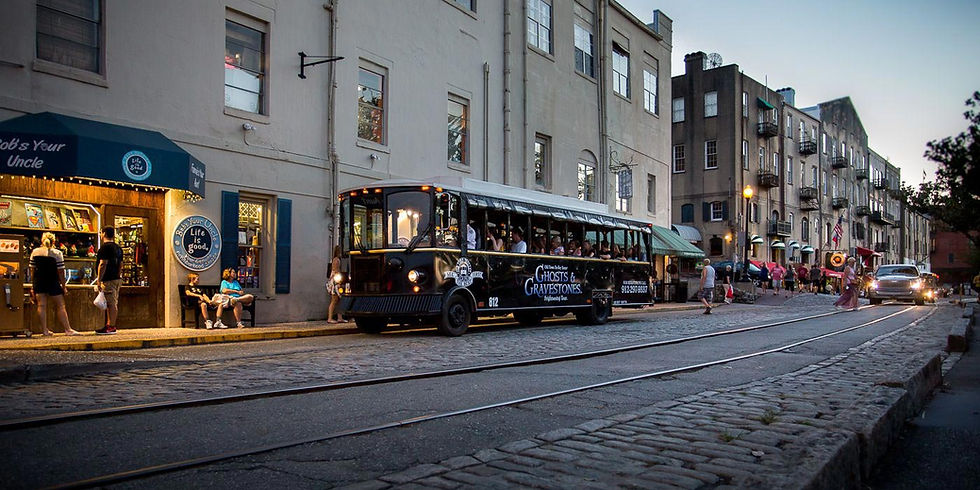
Walking through the historic district after dark, it is common to encounter groups gathered around lantern-lit guides recounting stories of past residents, mysterious sightings, and unexplained events. Ghost tours have become one of Savannah’s most popular visitor activities, blending historical storytelling with elements of folklore and theater.
This tradition reflects a broader storytelling culture in the American South. For generations, local history has been passed down through personal anecdotes, family stories, and community lore. Savannah’s preserved architecture provides an ideal stage for these narratives. A narrow alley, an iron balcony, or an old courtyard can easily become the setting for a tale about someone who once lived there.
Many of the stories are connected to specific locations across the city. Cemeteries such as Bonaventure and Colonial Park are frequently associated with legends about restless spirits. Historic homes have their own tales linked to former residents. Even some of Savannah’s long-established restaurants and taverns are said to have their own ghostly regulars.
Whether visitors believe the stories literally or simply enjoy them as part of Savannah’s atmosphere, the tradition has become an integral part of experiencing the city. The combination of preserved buildings, dramatic history, and a long storytelling tradition makes Savannah an unusually rich environment for folklore.
Why Historic Inns Often Become “Haunted Hotels”
Across the historic district, numerous hospitality properties were originally private homes, merchant residences, or commercial buildings before being converted into inns. These structures often date from the mid-19th century or earlier and have experienced many phases of use over time.
In some cases, buildings that now host overnight guests once served very different purposes. Certain properties were temporarily used as hospitals during the Civil War. Others housed extended families, businesses, or boarding houses before becoming hotels decades later. Each period added new stories, residents, and events to the building’s history.
Hotels also accumulate modern anecdotes more quickly than private homes. Staff members spend long hours in the building, often during quiet nighttime shifts, and guests regularly report unusual sounds or experiences simply because they are sleeping in unfamiliar surroundings. Over time, these small stories can merge with older local legends and become part of the property’s folklore.
In a city as historic as Savannah, where many buildings have stood for more than 150 years, it is easy to understand how these narratives develop. The historic inns of the city are not just places to stay. They are living pieces of Savannah’s architectural and social history.

The Haunted Inns of the VerdiGreen Collection
Several historic inns within Savannah’s historic district are known not only for their architecture and hospitality but also for the stories that surround them. The VerdiGreen Collection includes four such properties, each connected to a different chapter of Savannah’s past.
East Bay Inn
Located in Savannah’s riverfront district, East Bay Inn occupies a mid-19th century building that once stood at the center of the city’s busy cotton trade. The surrounding streets were historically filled with warehouses, merchants’ offices, and shipping activity connected to the port.
Over the years, guests and staff have occasionally mentioned sightings attributed to a resident spirit called “Charlie.” Stories describe unexplained footsteps or objects moving slightly out of place. While such anecdotes are difficult to verify, they have become part of the building’s local lore.
The setting of the inn contributes to the atmosphere. The riverfront district was historically a working waterfront where sailors, traders, and laborers passed through daily. Today the same brick warehouses and cobblestone streets remain, offering a glimpse into Savannah’s commercial past.
Kehoe House
Kehoe House is one of Savannah’s most recognizable historic mansions, built in the late 19th century for William Kehoe, a prominent iron foundry owner. The ornate structure reflects the prosperity of Savannah during the Victorian era, when wealthy families constructed elaborate homes around the city’s squares.
Stories connected to the house often reference the Kehoe family and their children, who once lived in the residence. Guests have occasionally reported unexplained scents, faint laughter, or other subtle experiences sometimes attributed to youthful spirits lingering in the home.
Whether interpreted as folklore or imagination, these stories reflect the building’s long residential history. Unlike many hotels built for hospitality, Kehoe House began as a family home filled with daily life, celebrations, and tragedies typical of the Victorian period.
Eliza Thompson House
The Eliza Thompson House traces its origins to the 1840s, making it one of the earlier historic homes still standing in Savannah. Like many buildings in the district, it has passed through several different uses over the decades, including residential occupancy and later office space before becoming an inn.
The property’s layered history has produced its own share of local legends. Some stories suggest sightings of figures believed to be soldiers or former residents, reflecting the turbulent years of the Civil War period and Savannah’s subsequent rebuilding.
Architecturally, the house represents an earlier phase of Savannah’s residential development, when elegant townhomes were constructed around landscaped gardens and quiet squares. The building’s continuity across nearly two centuries contributes to the sense that many lives have passed through its rooms.
The Gastonian
The Gastonian occupies two adjoining townhouses built during the Civil War era, reflecting Savannah’s late 19th century residential architecture. Originally private homes for prominent families, the buildings retain much of their historic character, from grand staircases to carefully preserved interiors.
Unlike many historic properties in Savannah, The Gastonian is not associated with ghost stories or local legends. While the city’s past is ever-present in its architecture and atmosphere, this particular residence offers a quieter, more grounded experience of Savannah’s history.
For guests drawn to the beauty and depth of the historic district but less interested in its paranormal reputation, The Gastonian provides a sense of continuity without the folklore. Its atmosphere is defined not by stories of the unexplained, but by the craftsmanship, scale, and calm elegance of a well-preserved historic home.